Creating a brand for your print on demand (POD) business involves developing a unique identity, visual style, and voice that resonates with a specific audience, moving beyond generic designs to foster customer loyalty and recognition in a competitive market. It’s about establishing what your business stands for, who it serves, and what makes it distinct, right from the initial planning stages.
Key Takeaways
- Branding transforms a POD store from a collection of products into a memorable entity with a distinct personality.
- Niche selection is crucial; a focused target audience simplifies design, marketing, and brand messaging.
- A strong brand identity includes a memorable name, a professional logo, consistent visual elements, and a clear brand voice.
- Social media is vital for POD brands, enabling direct engagement, community building, and visual product showcases.
- High-quality mockups are essential for professional product presentation, helping customers visualize items as branded goods.
- Starting branding efforts early, ideally before launching products, sets a solid foundation for growth.
- Avoiding common mistakes like generic designs, inconsistent messaging, or neglecting customer experience is key to success.
- Branding costs can range from DIY efforts to professional design services, scalable to your budget.
- Rebranding is possible, but an initial strategic approach minimizes the need for extensive overhauls later.
What is Print on Demand Branding Anyway?
Print on demand branding is the strategic process of creating a unique identity, personality, and perception for your print on demand business in the minds of your target customers. It goes beyond merely selling products with custom designs; it involves cultivating a distinct aesthetic, voice, and set of values that differentiate your store from competitors and build emotional connections with buyers. Essentially, it answers the question: “Why should a customer choose my custom mug or t-shirt over another?”
This process encompasses every touchpoint a customer has with your business, from your logo and website design to your product packaging, social media presence, and customer service. A well-executed brand communicates quality, purpose, and a unique story, converting one-time buyers into loyal advocates. For instance, a POD brand specializing in humorous pet-themed apparel might develop a playful logo, use witty captions, and engage with a community of pet lovers online, creating an experience rather than just selling t-shirts.
How is Branding for POD Different from a Regular Ecommerce Store?
Branding for print on demand differs from a regular e-commerce store primarily because the physical product manufacturing and fulfillment are outsourced, shifting the core focus of the business onto design, marketing, and brand identity.
Unlike traditional e-commerce where you might source unique products, manage inventory, and oversee manufacturing quality directly, a POD business sells designs that are printed on generic base products (like t-shirts, mugs, or posters) by a third-party supplier.
This means that the brand itself, and the unique designs it offers, must be the primary differentiator, rather than proprietary product features or logistics.
Therefore, the emphasis is heavily placed on creative design, storytelling, and building a strong emotional connection with the target audience.
A regular e-commerce store might differentiate through proprietary product development, faster shipping, or exclusive supplier relationships, whereas a POD brand must excel at cultivating a unique aesthetic, fostering a community, and communicating a distinct value proposition through its designs and marketing.
For example, a POD store can’t offer a uniquely designed mug material, but it can offer a uniquely designed graphic on a standard mug.
What are Some Good Examples of Successful Print on Demand Brands?
Successful print on demand brands often excel by focusing on a specific niche, cultivating a strong visual identity, and engaging effectively with their audience. While specific company names can be sensitive to cite without direct permission, several archetypes demonstrate strong branding principles.
Consider a brand that exclusively sells minimalist, nature-inspired art prints and apparel. Their success lies in a consistent aesthetic, a muted color palette, and marketing that emphasizes sustainability and tranquility. Another example might be a brand targeting specific fandoms with unique, unofficial merchandise designs.
Their branding is built around understanding fan culture, using inside jokes, and creating designs that resonate deeply with that passionate community. A third successful model is a brand offering personalized gifts for specific occasions (e.g., custom baby shower onesies or wedding party t-shirts).
Their branding focuses on celebrating life’s milestones, emphasizing customization, and positioning their products as thoughtful, unique presents. These brands don’t just sell products; they sell an experience, a lifestyle, or a feeling, which is critical for POD success.
What’s the First Step to Building a Brand for My POD Business?
The first step to building a brand for your print on demand business is to define your core identity and target audience. Before you even think about logos or product designs, you need to understand who you are as a brand and who you are trying to reach. This foundational work guides all subsequent branding decisions.
This involves asking critical questions such as:
- What is your brand’s mission or purpose? (e.g., “To spread positivity through humorous animal designs,” or “To empower women with inspirational quotes.”)
- What are your brand’s core values? (e.g., creativity, humor, sustainability, empowerment, nostalgia.)
- Who is your ideal customer? (Consider demographics like age, gender, location, but also psychographics like interests, values, lifestyle, and pain points.)
- What unique problem do you solve or what desire do you fulfill for this customer?
- What is your unique selling proposition (USP)? What makes your brand different from others in the POD space?
Answering these questions creates a clear brand compass, ensuring that every design, marketing message, and customer interaction aligns with your overarching vision. Without this clarity, your brand risks becoming generic and forgettable.
Should I Focus on a Niche for My Print on Demand Brand?
Yes, focusing on a niche is highly recommended and often crucial for success when creating a brand around your print on demand business. A well-defined niche allows you to target a specific audience with tailored designs and marketing efforts, making your brand more recognizable and relevant to those customers. Trying to appeal to everyone often results in appealing to no one, especially in the saturated POD market.
By specializing, you can:
- Develop highly relevant designs: Your products will directly address the interests, humor, or aesthetic preferences of your niche. For example, instead of generic “funny t-shirts,” you might create “funny t-shirts for cat owners.”
- Simplify marketing: Knowing your audience makes it easier to choose social media platforms, craft ad copy, and understand where your potential customers spend their time online.
- Build a community: A niche allows you to foster a loyal following of individuals who share a common interest, leading to repeat purchases and word-of-mouth referrals.
- Reduce competition (in specific segments): While the overall POD market is competitive, a narrow niche can have less direct competition, allowing your brand to stand out more easily.
Choosing Your Niche:
When selecting a niche, consider a blend of your passions, existing market demand, and the potential for unique design concepts. For instance, if you love hiking and notice a gap for stylish, outdoor-themed apparel with minimalist designs, that could be a strong niche.
How Do I Choose a Good Name for My POD Brand?
Choosing a good name for your print on demand brand is a critical branding step, as it’s often the first point of recognition and plays a significant role in memorability and recall. An effective brand name should be unique, easy to pronounce and spell, relevant to your niche, and ideally, convey a hint of your brand’s personality.
Here’s a step-by-step approach to selecting a powerful name:
- Brainstorm Keywords & Concepts: Start by listing words associated with your niche, target audience, brand values, and the feelings you want to evoke. If you sell funny dog apparel, think “bark,” “woof,” “paws,” “mutt,” “grin,” “wag,” “pup,” “snuggle,” “happy.”
- Explore Different Naming Styles:
- Descriptive: Clearly states what you offer (e.g., “Cozy Cat Apparel”).
- Evocative: Suggests an image or feeling (e.g., “Whisker Wonders”).
- Invented/Abstract: Unique and memorable (e.g., “Pawprintz”).
- Acronyms: Shorter version of a longer name (less common for POD).
- Founder’s Name: (e.g., “Jane’s Designs”).
- Keep it Simple & Memorable: Aim for names that are relatively short, easy to say aloud, and simple to remember. Avoid complex spellings or names that are difficult to pronounce.
- Check for Availability: This is crucial. Before settling, verify that:
- The corresponding
.comdomain name is available. - The desired social media handles (e.g., Instagram, Facebook) are available.
- The name isn’t trademarked or already in use by a similar business (a quick search on trademark databases for your region is advised).
- The corresponding
- Get Feedback: Share your top choices with trusted friends or potential customers to gauge their reactions and ensure the name is understood as intended.
Decision Rule: Choose a name that not only sounds good but also has longevity and allows for brand growth beyond your initial product offerings. A name too restrictive (e.g., “OnlyTshirtPrints”) might limit future expansion into other product categories.
What Kind of Logo Should I Create for My Print on Demand Business?
When creating a logo for your print on demand business, aim for a design that is simple, memorable, versatile, and reflective of your brand’s unique identity and niche. Your logo should instantly communicate your brand’s essence and be easily recognizable across various platforms and product types.
Consider these types of logos:
- Wordmark (Logotype): Text-only logo using a distinct font (e.g., “Google”). Ideal if your brand name is unique and memorable. Focus on typography that matches your brand’s personality (e.g., playful, elegant, bold).
- Lettermark (Monogram): Uses initials (e.g., “IBM”). Best for longer brand names, but less common for new POD businesses unless combined with a symbol.
- Pictorial Mark (Brandmark): A graphic or icon (e.g., Apple’s apple). Strong if the image clearly represents your brand, but can be challenging without text.
- Abstract Mark: A unique, non-representational geometric shape (e.g., Nike’s swoosh). Can be very distinctive but requires significant brand building to associate with meaning.
- Mascot: A character representing your brand. Great for appealing to families or specific niches (e.g., fun, kid-friendly brands).
- Combination Mark: Blends text and a symbol/icon (e.g., “Adidas” with its three stripes). This is often the most effective for new POD businesses as it offers both visual recall and direct brand name recognition.
Key Logo Design Principles:
- Simplicity: A cluttered logo is hard to remember and reproduce. Clean lines and minimal elements are usually best.
- Memorability: It should be distinct enough to stand out from competitors.
- Versatility: Your logo must look good across different mediums: your website, social media profiles, product tags (if applicable), and even small avatars. It should work in both color and black & white.
- Relevance: The design and color palette should align with your brand’s niche and message. A brand selling edgy streetwear would use a different aesthetic than one selling whimsical baby clothes.
- Scalability: The logo should remain clear and legible whether it’s tiny on a product label or large on a banner.
Actionable Tip: If you’re on a budget, start with a simple, well-chosen wordmark or a combination mark using a free logo maker or a designer from platforms like Fiverr. As your business grows, you can invest in a more sophisticated design.
How Important is Social Media for a Print on Demand Brand?
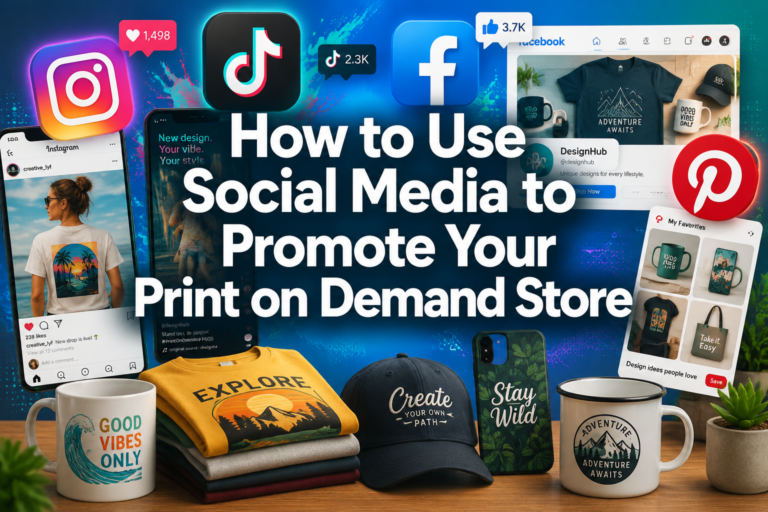
Social media is profoundly important for a print on demand brand, serving as a primary channel for brand building, community engagement, product showcase, and direct marketing.
Given that POD businesses often lack physical storefronts or unique product materials, social media platforms become virtual showrooms and interaction hubs where your designs and brand personality can truly shine.
Benefits of Social Media for POD:
- Visual Showcase: Platforms like Instagram, Pinterest, and TikTok are ideal for displaying product mockups and lifestyle photos of your designs in action, helping customers visualize themselves using or wearing your products.
- Brand Storytelling: You can use social media to share the inspiration behind your designs, your brand values, and connect with your audience on a deeper level.
- Community Building: Engage with followers, respond to comments, run polls, and create a sense of belonging around your niche. This fosters loyalty and encourages user-generated content.
- Direct Sales & Traffic: Many platforms offer shopping features or allow direct links to your store, driving traffic and conversions.
- Market Research: Social media provides invaluable insights into customer preferences, trending designs, and competitor activities through comments, likes, and engagement metrics.
- Customer Service: It offers another avenue for customers to ask questions and receive support, enhancing the overall brand experience.
Example: A POD brand selling retro-themed gaming apparel might thrive on TikTok by creating short, nostalgic video content featuring their products, using popular gaming sounds, and engaging with other gamers. This builds a strong, engaged community far more effectively than merely listing products on a website.
Where Can I Find Good Mockups to Showcase My Branded Products?
Finding good mockups is crucial for a print on demand business, as they professionally showcase your designs and help customers visualize the product in a realistic context without the need for physical inventory. High-quality mockups can significantly impact perceived value and conversion rates.
Here are reliable sources for obtaining mockups:
- Print on Demand Providers: Many POD platforms (e.g., Printful, Printify, Gelato) offer built-in mockup generators directly within their design tools. These are convenient and typically accurate for their specific product catalog.
- Dedicated Mockup Websites:
- Placeit by Envato: Offers a vast library of high-quality photo and video mockups for various products (apparel, mugs, tech accessories) with an easy-to-use editor. It’s subscription-based but provides immense value.
- Smartmockups: Another excellent platform with a wide range of professional mockups, often including diverse models and realistic settings.
- Mockupworld / Mockups Design: Free and paid resources, often curating PSD files from various designers.
- Graphic Design Marketplaces:
- Envato Elements: A subscription service offering unlimited downloads of high-quality mockup PSD files, photos, fonts, and more.
- Creative Market: Sells individual mockup templates from independent designers, allowing for unique, niche-specific options.
- Etsy: Many designers sell individual mockup bundles specifically for POD sellers, often at affordable prices.
- Stock Photo Sites with PSDs: Some stock photo platforms (e.g., Adobe Stock, Shutterstock) offer layered PSD files that can be adapted into mockups if you have Photoshop skills.
- Free Resources: Websites like Freepik, Pexels, and Unsplash sometimes offer free mockups or high-quality photos that can be used with basic photo editing for a more custom look. Be sure to check licensing.
Recommendation: While free mockups can be a starting point, investing in a subscription to a dedicated mockup service like Placeit or Smartmockups often provides the best balance of quality, variety, and ease of use, elevating your brand’s presentation significantly.
What Are Some Common Mistakes to Avoid When Branding a POD Business?
When establishing a brand around your print on demand business, several pitfalls can hinder growth and market acceptance. Avoiding these common mistakes is as crucial as implementing best practices.
Here are key errors to steer clear of:
- Generic or Trend-Chasing Designs: Relying solely on popular, fleeting trends or creating designs that lack originality makes your brand indistinguishable. This leads to a lack of identity and difficulty building a loyal customer base. Instead, focus on unique designs that align with your niche and brand values.
- Inconsistent Branding: Using different logos, color palettes, fonts, or brand voices across your website, social media, and product descriptions creates confusion and erodes trust. Consistency builds recognition and reinforces your brand’s personality.
- Neglecting Niche Selection: Attempting to appeal to everyone dilutes your brand message and makes it impossible to effectively target marketing efforts. A broad approach is often a weak approach in POD.
- Poor Quality Mockups or Photography: Using low-resolution, poorly lit, or unprofessional mockups devalues your products and brand. Customers judge product quality partly by its presentation.
- Lack of a Clear Brand Story: Without a compelling narrative about why your brand exists and what it stands for, customers have no emotional connection. A brand story helps differentiate you beyond just the designs.
- Ignoring Customer Experience: Branding extends to customer service, website usability, and communication. A confusing website or slow responses can damage even the best visual brand.
- Overlooking Legalities: Failing to check for trademark infringements for your brand name or using copyrighted designs can lead to costly legal issues.
- Expecting Overnight Success: Branding is a long-term investment. Building recognition and loyalty takes time and consistent effort, not just a flashy logo.
By proactively addressing these areas, you can lay a stronger foundation for a successful and enduring print on demand brand.
How Much Does It Cost to Brand a Print on Demand Business?
The cost of branding a print on demand business can vary significantly, ranging from nearly zero for a completely DIY approach to several thousands of dollars for professional agency services. The expense largely depends on the complexity of your brand vision, your skill set, and whether you opt for free tools, paid templates, or professional design services.
Here’s a breakdown of potential costs:
| Branding Element | DIY (Low Cost / Free) | Mid-Range (Affordable Professional) | High-End (Full Professional) |
|---|---|---|---|
| Brand Name & Niche | Free (your time for research) | Free (your time for research) | Free (your time for research) |
| Logo Design | Free logo makers (Canva, Hatchful) | Freelancer (Fiverr, Upwork): $50 – $500 | Design Agency/Senior Designer: $1,000 – $5,000+ |
| Brand Guide | Self-created document | Freelancer (basic guide): $100 – $300 | Agency (comprehensive guide): $500 – $2,000+ |
| Website/Store Design | Free templates (Shopify, Etsy, Printify storefronts) | Premium themes/templates: $50 – $300 | Custom web design: $1,000 – $5,000+ |
| Product Mockups | Free mockup generators (POD providers), basic templates | Placeit/Smartmockups subscription: $10 – $30/month | Custom photography or advanced 3D renders: $200 – $1,000+ per shoot |
| Social Media Assets | Free templates (Canva), DIY graphics | Freelancer (template customization): $50 – $200 | Professional social media kit: $300 – $1,000+ |
| Legal (Trademark) | DIY searches (USPTO, local registries) | Legal counsel for basic trademark search/application: $500 – $2,000 | Comprehensive legal services: $2,000+ |
| Total (Estimate) | $0 – $50 | $300 – $1,500+ | $4,000 – $15,000+ |
Consideration: For most new POD entrepreneurs, a mid-range approach that leverages affordable freelance designers for critical elements like a logo and brand guide, combined with subscription mockup services, offers the best balance of quality and cost-effectiveness in 2026. Focus initial spending on elements that directly impact first impressions and brand perception.
When Should I Start Thinking About Branding in My Print on Demand Journey?
You should start thinking about branding at the very beginning of your print on demand journey, ideally before you even create your first design or set up your online store. Branding is not an afterthought or something you add once your business is established; it is the foundational strategy that informs every subsequent decision.
Starting branding early allows you to:
- Define Your Niche: Early branding exercises force you to clarify your target audience and the specific market segment you want to serve, which is crucial for differentiating yourself.
- Guide Design Choices: A clear brand identity helps you create cohesive and on-brand designs, preventing a haphazard collection of products. If your brand is “minimalist cat art,” you know exactly what type of designs to create.
- Inform Store Setup: Your brand’s aesthetic (colors, fonts, imagery) will dictate your website’s look and feel, ensuring a consistent user experience from the outset.
- Craft Marketing Messages: With a defined brand voice and values, creating compelling social media content, product descriptions, and ad copy becomes much easier and more effective.
- Build Recognition Faster: Consistent branding from day one helps customers recognize and remember your business more quickly, accelerating brand loyalty.
Trying to retroactively brand a business can be more challenging and costly, as it may involve redesigning products, updating a website, and re-establishing your brand’s image with existing customers. Therefore, view branding as the strategic blueprint for your entire POD venture.
What if My Designs Aren’t Unique Enough for Branding?
If your print on demand designs don’t feel unique enough for branding, it indicates a critical area that needs attention, as distinctiveness is paramount in a crowded market. The solution isn’t to abandon branding, but to re-evaluate and refine your design strategy to ensure your offerings truly stand out and align with your chosen niche.
Here’s how to address a lack of design uniqueness:
- Refine Your Niche: Sometimes, designs feel generic because the niche itself is too broad or oversaturated. Drill down further. Instead of “dog lovers,” consider “vintage-style illustrations for specific dog breeds,” or “humorous designs for rescue dog owners.” A tighter niche naturally guides more unique design ideas.
- Develop a Unique Artistic Style: Even within common themes, a distinct artistic style can differentiate your brand. Are your designs hand-drawn, minimalist, retro, grungy, watercolor, cartoonish, or photo-realistic? Consistent application of a particular style makes your products recognizable as yours.
- Focus on Specific Messaging/Perspective: What unique message or point of view does your brand offer? Can you infuse a sense of humor, irony, inspiration, or advocacy into your designs that others aren’t doing in the same way? For example, instead of just a “coffee lover” shirt, what about “I’m not a morning person, I’m a coffee person. (And I need 3 cups.)”?
- Combine Concepts Creatively: Take two seemingly unrelated interests from your niche and combine them. “Yoga + Cats” or “Astronomy + Coffee.” This often leads to novel design concepts.
- Listen to Your Audience: Engage with your target audience (even if hypothetical initially) to understand their unmet needs or desires for specific types of designs they can’t find elsewhere.
- Invest in Skill Development: If your design skills are a limiting factor, consider online courses or tutorials to improve your graphic design capabilities, which can open up more unique creative avenues.
- Iterate and Get Feedback: Create several design variations and get honest feedback from potential customers. What resonates? What feels fresh? What feels generic?
Key Takeaway: Uniqueness isn’t always about creating something entirely new; it’s often about applying a distinct style, perspective, or focus to an existing concept, specifically tailored to a passionate niche. Your brand’s “look” and “feel” should be instantly identifiable.
Can I Rebrand My Print on Demand Business Later if It’s Not Working?
Yes, you can absolutely rebrand your print on demand business later if your initial branding isn’t resonating or if your business strategy evolves. Rebranding is a common practice in the business world, allowing companies to adapt to market changes, correct missteps, or pivot to new opportunities.
However, it’s important to understand that rebranding is an intensive process with potential costs and challenges:
- Time and Effort: It involves redesigning logos, updating website aesthetics, revising brand messaging, changing social media identities, and potentially updating product designs.
- Customer Confusion: Existing customers might be confused by the change, so a clear communication strategy about the rebrand is essential.
- Lost Recognition: You might temporarily lose some brand recognition built under the old identity.
- Financial Cost: Depending on the extent of the rebrand, there could be costs associated with new design work, marketing materials, and legal updates (if changing the business name).
Reasons for Rebranding:
- Lack of Differentiation: Your current brand is too generic and doesn’t stand out.
- Target Audience Shift: You’ve decided to pivot to a different niche or demographic.
- Outdated Aesthetic: Your brand no longer looks modern or appealing.
- Negative Perception: The current brand has somehow acquired a negative association.
- Expansion: You’re expanding product lines or services beyond what the original brand name or identity could encompass.
While rebranding is an option, it is generally more efficient and less costly to invest time in thorough initial branding research and development. A strong foundation from the start minimizes the need for extensive overhauls down the line.
Conclusion
Creating a brand around your print on demand business is not merely an optional step; it is a fundamental pillar for long-term success and differentiation in an increasingly saturated market. By defining a clear niche, developing a unique visual and verbal identity, and consistently communicating your brand’s values, you transform a simple collection of products into a memorable and engaging customer experience.
From selecting a distinctive name and designing a versatile logo to leveraging social media for authentic engagement and presenting products with professional mockups, every branding decision contributes to building customer loyalty and recognition.
While the initial investment in time and thought is significant, a well-executed brand reduces marketing friction, justifies premium pricing, and fosters a community of passionate advocates. Avoid common pitfalls like generic designs or inconsistent messaging, and remember that branding is an ongoing journey of refinement and connection.
Start your branding efforts early, align them with a specific vision, and continuously listen to your audience to cultivate a POD business that truly stands out.
FAQ
Q: How do I make my POD brand memorable?
A: To make your POD brand memorable, focus on a unique niche, develop a consistent and distinctive visual identity (logo, colors, fonts), cultivate a recognizable brand voice, and tell a compelling story about your purpose and values. Consistency across all touchpoints is key.
Q: Can I run a successful POD business without branding?
A: While you might make some sales without explicit branding, it’s significantly harder to build customer loyalty, command higher prices, or stand out from competitors. Without a brand, your business is just a generic product seller, making long-term success challenging.
Q: How important is my brand’s color palette?
A: Your brand’s color palette is extremely important as it evokes emotions, influences perception, and contributes significantly to brand recognition. Choose colors that align with your niche, brand personality, and target audience’s preferences.
Q: Should I trademark my POD brand name or logo?
A: While not strictly required for starting, trademarking your brand name and logo offers legal protection against others using your unique identity, especially as your business grows. It’s a wise investment once your brand gains traction and you want to secure its distinctiveness.
Q: How often should I update my brand?
A: Minor updates to your brand (like refreshing social media templates) can happen periodically. A full rebrand, however, is typically undertaken only every few years, or when there’s a significant shift in your business model, target audience, or market landscape.
Q: What’s the difference between branding and marketing for POD?
A: Branding is who you are as a business (your identity, values, personality), while marketing is how you communicate that identity to attract and engage customers (social media posts, ads, email campaigns). Branding is the foundation; marketing is the execution of that brand message.
Q: Can AI tools help with POD branding?
A: Yes, AI tools can assist with various aspects of POD branding, such as generating logo ideas, suggesting brand names, helping with copywriting for product descriptions, and even creating design variations. However, human creativity and strategic oversight remain essential for truly unique and resonant branding.
Q: How can I ensure my brand’s consistency?
A: Create a simple brand style guide that outlines your logo usage, color palette (with hex codes), typography, brand voice guidelines, and imagery style. Refer to this guide for all your design and communication efforts, and ensure anyone working with you adheres to it.
Q: Is it better to have a personal brand or a business brand for POD?
A: This depends on your goals. A personal brand leverages your individual identity and story, often creating a strong connection with an audience. A business brand allows for broader scaling and can feel more established. Many successful POD entrepreneurs start with a personal brand and then transition to a business brand.
Q: What role does customer service play in branding?
A: Customer service is a direct extension of your brand. Excellent, consistent, and on-brand customer service (e.g., friendly, helpful, efficient) reinforces your brand’s values and builds trust and loyalty, turning transactions into relationships.
Q: What if I have multiple niches? Should I create multiple brands?
A: Generally, it’s best to create separate brands for distinctly different niches to maintain clarity and focus for each. Trying to combine vastly different niches under one brand can dilute its identity and confuse your target audiences.
Q: How do I measure my brand’s success?
A: Brand success isn’t just about sales. Measure it through brand recognition (surveys, social media mentions), customer loyalty (repeat purchases, reviews), brand perception (customer feedback, sentiment analysis), and engagement metrics (social media interaction rates).

Share this:

Discover more from Fahza Enterprise
Subscribe to get the latest posts sent to your email.