

Imagine launching a thriving e-commerce store without ever holding a single piece of inventory, managing complex logistics, or investing heavily in equipment. Sounds like a dream, right? Welcome to the powerful world of print on demand (POD), a revolutionary business model that’s transforming how entrepreneurs bring their creative visions to life and connect with customers globally.
In this year, print on demand isn’t just a niche; it’s a mainstream force empowering designers, artists, marketers, and small business owners to scale their operations with unprecedented flexibility and minimal risk. This comprehensive guide will peel back the layers of print on demand, revealing its mechanics, benefits, challenges, and how you can harness its potential to build a successful venture.
A few years ago, I met a young artist named Maya. She was incredibly talented but struggled to monetize her unique digital art. The cost of printing her designs on t-shirts, mugs, and canvases in bulk was prohibitive, and she dreaded the thought of storing boxes of unsold merchandise.
Then, she discovered print on demand. Fast forward to 2025, and Maya now runs a successful online store, her designs adorning products shipped directly to customers worldwide, all without her ever touching a physical product. Her story isn’t unique; it’s a testament to the transformative power of print on demand.
Key Takeaways
- Low Startup Costs & Risk: Print on demand eliminates the need for inventory, warehousing, and bulk purchases, significantly reducing initial investment and financial risk.
- Flexibility & Scalability: Easily add new designs and products without commitment, allowing for rapid testing and scaling based on market demand.
- Wide Product Range: Offer a diverse catalog from apparel and accessories to home decor and stationery, all customized with your unique designs.
- Focus on Creativity & Marketing: With fulfillment handled by the POD provider, entrepreneurs can dedicate more time to design, brand building, and customer engagement.
- Evolving Landscape: The print on demand industry is continuously innovating, offering better quality, faster shipping, and more sophisticated integration options in 2025.
What Exactly is Print on Demand? Understanding the Core Concept
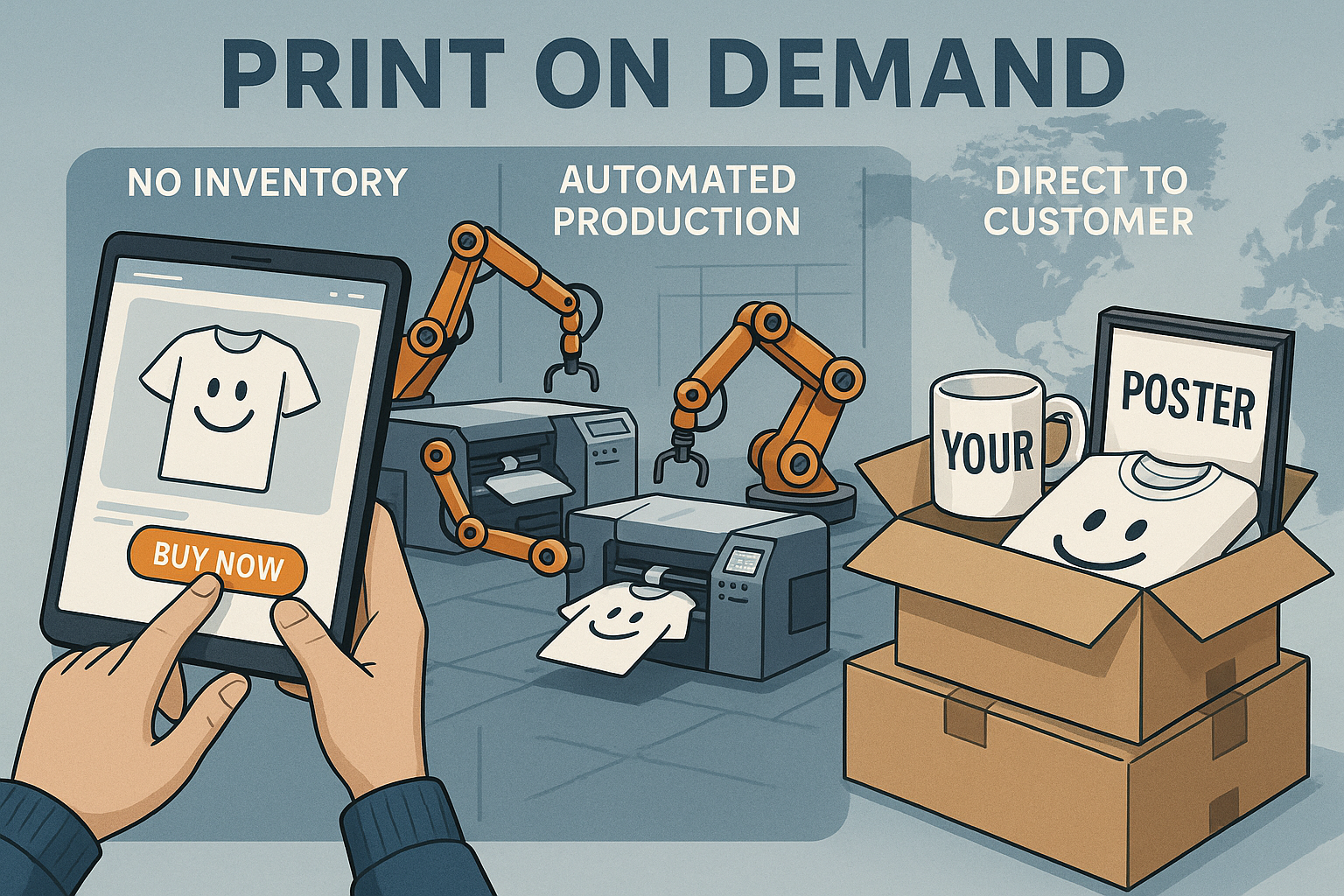
At its heart, print on demand is a fulfillment method where products are printed only after an order is placed. Instead of stocking inventory, you partner with a print on demand supplier. When a customer buys a product from your online store, the order is automatically sent to your POD partner. They print your design onto the product, package it, and ship it directly to your customer under your brand. This means you only pay for the product and printing when a sale is made, effectively eliminating inventory risk and upfront manufacturing costs.
Think of it as dropshipping, but for custom-designed products. This model has democratized product creation, allowing individuals and small businesses to compete with larger brands by leveraging personalized and unique offerings.
The Traditional vs. Print on Demand Model
To fully grasp the revolution that is print on demand, let’s briefly compare it to the traditional retail model:
| Feature | Traditional Retail | Print on Demand (POD) |
|---|---|---|
| Inventory | Large upfront purchase, warehousing required | No inventory, products printed as ordered |
| Startup Cost | High (inventory, equipment, space) | Low (website, design tools, platform fees) |
| Risk | High (unsold inventory, obsolescence) | Low (no dead stock) |
| Product Range | Limited by upfront investment | Vast, easily expanded or contracted |
| Fulfillment | Handled internally or via 3PL | Handled entirely by POD provider |
| Design Control | Full control over manufacturing | Design submitted to partner, quality varies slightly |
| Time to Market | Long (production, shipping, stocking) | Short (design, upload, list) |
| Scalability | Requires significant capital for expansion | Highly scalable without added operational burden |
The shift from traditional to print on demand represents a paradigm change, especially for creators and small businesses who prioritize agility and low risk.
The Diverse World of Print on Demand Products
One of the most exciting aspects of print on demand is the incredible variety of products you can offer. This expansive catalog allows entrepreneurs to cater to diverse niches and customer preferences. In 2025, the range continues to grow, pushed by advancements in printing technology and material science.
Popular Product Categories
- Apparel: This is perhaps the most well-known category, including:
- T-shirts (classic crew neck, V-neck, long sleeve)
- Hoodies and Sweatshirts
- Tank Tops
- Leggings and Joggers
- Hats and Beanies
- Socks
- Underwear
- Children’s clothing
- Accessories:
- Phone Cases (for various models)
- Tote Bags and Backpacks
- Mugs and Water Bottles
- Stickers and Magnets
- Keychains
- Jewelry (custom engraved)
- Home Decor:
- Canvas Prints and Posters
- Wall Art (metal, acrylic, wood)
- Pillows and Blankets
- Shower Curtains
- Coasters
- Towels (bath and beach)
- Notebooks and Journals
- Stationery & Gifts:
- Greeting Cards
- Calendars
- Notepads
- Custom Gift Boxes
- Pet Accessories (bandanas, bowls)
[[An anecdote about product diversification:]]
I recall a client who started with just t-shirts featuring sarcastic quotes. After seeing success, they noticed many of their customers also loved dogs. They quickly expanded their product line to include dog bandanas, pet bowls, and even custom dog beds using the same design principles. Within weeks, their sales soared in the new pet niche, all without buying a single item of inventory thanks to print on demand. This agility is a game-changer.
The key is to select products that align with your brand, your target audience, and the quality of your designs. A strong design can elevate a simple product into a premium item.
How to Start a Print on Demand Business in 2025: A Step-by-Step Guide
Launching a successful print on demand business requires more than just great designs; it demands strategic planning and execution. Here’s a roadmap to guide you in 2025:
Step 1: Niche and Product Selection
- Identify Your Niche: Don’t try to appeal to everyone. Focus on a specific audience with shared interests. Are they cat lovers? Gamers? Eco-conscious consumers? Artists? A defined niche helps with targeted marketing.
- Research Product Demand: Use tools like Google Trends, Etsy search, and Amazon Best Sellers to see what’s popular. Are there trending designs or product types that align with your niche?
- Consider Profit Margins: Not all products offer the same profit. Calculate the base cost, your desired profit, and market pricing to ensure viability.
Step 2: Create Compelling Designs
- Originality is Key: Stand out with unique, high-quality designs. Avoid copyright infringement at all costs.
- Design Tools: Utilize professional software like Adobe Photoshop/Illustrator, Canva Pro, or Affinity Designer. Many POD platforms also offer built-in design tools.
- Mockups: Use realistic mockups to showcase your designs effectively. Most POD providers offer these, or you can use dedicated mockup generators.
Step 3: Choose Your Print on Demand Partner and E-commerce Platform
This is a critical decision. Your POD partner handles the printing, fulfillment, and shipping, while your e-commerce platform is where customers will browse and buy.
Popular Print on Demand Providers:
- Printful: Known for high-quality products, excellent integrations, and a vast product catalog.
- Gelato: Focuses on global reach and local production, offering fast shipping and competitive pricing.
- Printify: Offers a network of print providers, allowing you to choose based on price, location, and product quality.
- CustomCat: Specializes in apparel with fast turnaround times.
- Gooten: Offers a wide range of products and strong API integrations for scaling.
E-commerce Platforms for Print on Demand:
- Shopify: The industry leader, offering extensive customization, apps, and robust e-commerce features.
- Etsy: Ideal for artists, crafters, and vintage sellers; a marketplace with a built-in audience.
- WooCommerce: A free plugin for WordPress, offering flexibility for those comfortable with website development.
- Squarespace/Wix: User-friendly website builders with integrated e-commerce capabilities.
Step 4: Set Up Your Online Store and Integrations
- Store Design: Create an attractive, user-friendly online store that reflects your brand.
- Product Listings: Upload your designs, write compelling product descriptions, and set your pricing.
- Integrate: Connect your chosen POD provider with your e-commerce platform. This usually involves an app or API integration that automates order fulfillment.
Step 5: Marketing and Sales
- Social Media Marketing: Use platforms like Instagram, TikTok, and Pinterest to showcase your products visually.
- SEO: Optimize your product listings and website content with relevant keywords (like “custom t-shirts” or “unique print on demand gifts”) to rank higher in search engines.
- Paid Advertising: Consider Google Ads, Facebook Ads, or Instagram Ads to reach a wider audience.
- Email Marketing: Build an email list to inform customers about new designs, promotions, and sales.
- Influencer Marketing: Partner with micro-influencers in your niche to promote your products.
Step 6: Customer Service and Optimization
- Excellent Service: Respond promptly to customer inquiries and resolve issues professionally.
- Feedback Loop: Listen to customer feedback to improve designs, product quality, and overall experience.
- Analyze Data: Use analytics to track sales, identify best-selling products, and understand customer behavior. Continually optimize your marketing and product offerings.
Advantages and Disadvantages of the Print on Demand Model
While print on demand offers immense potential, it’s essential to approach it with a clear understanding of both its benefits and its limitations.
The Upsides of Print on Demand ✨
- Low Startup Costs: This is arguably the biggest draw. You don’t need to buy thousands of dollars worth of inventory upfront. Your primary investments are design tools, website fees, and marketing.
- No Inventory Management: Say goodbye to warehousing, stock counting, and dealing with unsold products. Your POD partner handles all the physical aspects.
- Risk-Free Product Testing: Want to see if a design sells? Upload it to a few products. If it doesn’t perform, simply remove it. No financial loss from unsold stock.
- Wide Product Customization: Offer endless variations of designs across a vast array of products, catering to niche markets with unique offerings.
- Focus on Branding and Marketing: Since fulfillment is outsourced, you can dedicate more time and energy to creating stunning designs, building your brand story, and connecting with your audience.
- Scalability: As your business grows, your POD partner scales with you. There’s no need to rent bigger warehouses or hire more staff to handle increased order volume.
- Location Independence: Run your business from anywhere in the world, as long as you have internet access.
The Downsides to Consider ⚠️
- Lower Profit Margins: Because you’re paying for single-item production and fulfillment, the per-item cost is generally higher than bulk manufacturing, leading to smaller profit margins.
- Reliance on POD Provider: You are dependent on your partner for product quality, printing accuracy, and shipping times. Any issues on their end reflect on your brand.
- Limited Customization Options: While designs are custom, the actual product blanks (t-shirts, mugs, etc.) are standardized. You might not have full control over tags, specific materials, or unique packaging.
- Shipping Challenges:
- Varying Costs: Shipping costs can be inconsistent across different providers or product types.
- Multiple Packages: If a customer orders different product types (e.g., a t-shirt from one print facility and a mug from another), they might receive multiple packages, which can be confusing.
- Returns: Handling returns often involves the customer shipping directly back to the POD provider, or you issuing a refund and letting them keep the item.
- Quality Control: Since you don’t physically inspect each item, maintaining consistent quality can be a challenge. It’s crucial to order samples and thoroughly vet your POD partner.
- Competition: The low barrier to entry means the market can be saturated. Standing out requires unique designs, strong branding, and effective marketing.
Navigating these challenges requires careful research, selecting reliable partners, and a proactive approach to customer service.
The Future of Print on Demand in 2026 and Beyond
The print on demand industry is not static; it’s a rapidly evolving landscape driven by technological advancements and shifting consumer demands. In 2025, we’re seeing exciting trends that promise to reshape how businesses leverage POD.
Key Trends Shaping the Industry
- Hyper-Personalization: Beyond just custom designs, expect more options for customers to personalize products with their names, photos, or unique data points. AI and machine learning will play a larger role in generating these unique customizations.
- Sustainability and Ethical Sourcing: Consumers are increasingly conscious of environmental impact. POD providers are responding by offering eco-friendly materials (organic cotton, recycled polyester), sustainable printing methods, and carbon-neutral shipping options. This will be a major differentiator.
- Enhanced Integration with Social Commerce: Direct selling on platforms like Instagram, TikTok Shop, and even live-shopping events will become more seamless with direct POD integrations, shortening the path from discovery to purchase.
- Advanced Product Offerings: Expect to see more complex and niche products, from bespoke furniture components to 3D-printed jewelry and specialized sporting goods. The line between traditional manufacturing and on-demand will continue to blur.
- Localized Production and Faster Shipping: The drive for faster delivery and reduced carbon footprint will push POD providers to expand their global networks, offering more localized printing facilities to serve customers quicker and more efficiently.
- AI-Powered Design & Marketing: Artificial intelligence will assist designers in creating new patterns and styles, and help marketers target audiences with hyper-specific campaigns, optimizing everything from ad copy to product recommendations.
[[A story about innovation:]]
Just last month, I spoke with the CEO of a mid-sized POD company. He shared how they’re investing heavily in AI to help small businesses. “Imagine a system,” he explained, “where an entrepreneur just inputs a few keywords about their niche, and our AI generates a dozen unique, market-tested design concepts for them. Then, with a click, those designs are mocked up on a range of products and even populate their online store. That’s the power we’re aiming for in 2025.” This vision highlights the profound ways technology will empower even the smallest players in the market.
These trends indicate a future where print on demand is even more accessible, efficient, and aligned with modern consumer values. Businesses that embrace these innovations will be well-positioned for long-term success.
Conclusion: Embracing the Power of Print on Demand in 2025
Print on demand has undeniably revolutionized the e-commerce landscape, offering an unparalleled opportunity for entrepreneurs, artists, and brands to bring their creative visions to market with minimal risk and maximum flexibility. In 2025, it continues to evolve, pushing boundaries in product customization, sustainability, and technological integration.
Whether you’re a seasoned entrepreneur looking to diversify your offerings or a creative individual eager to launch your first product line, the print on demand model provides a robust framework for success. By understanding its mechanics, carefully selecting your partners, honing your designs, and implementing effective marketing strategies, you can build a thriving business that resonates with customers worldwide.
The journey won’t be without its challenges – navigating profit margins, ensuring quality control, and standing out in a competitive market require dedication and strategic thinking. However, the benefits of low startup costs, no inventory headaches, and the freedom to focus on what you do best – create and connect – make print on demand an incredibly attractive and sustainable business model for the modern era.
Actionable Next Steps:
- Define Your Niche: Spend time researching and identifying a specific target audience whose needs and interests you can uniquely serve.
- Develop Your Designs: Invest in high-quality design work that truly reflects your brand and appeals to your chosen niche.
- Research POD Partners: Thoroughly evaluate different print on demand providers based on product quality, pricing, shipping times, and integrations. Order samples!
- Set Up Your Store: Choose an e-commerce platform that suits your technical comfort level and business goals, and build an attractive, user-friendly online store.
- Start Marketing: Begin with organic social media and SEO, then consider targeted paid advertising as you gain traction.
Embrace the future of e-commerce with print on demand, and unlock the potential to turn your creative ideas into a profitable reality.
Meta Title: Print on Demand Guide 2025: Start Your POD Business
Meta Description: Explore print on demand in 2025! Learn how to launch a successful POD business with low costs, high flexibility, and expert tips for e-commerce.
Discover more from Fahza Enterprise
Subscribe to get the latest posts sent to your email.
